Public Information & Services
Public Awareness
Rights of Citizens in Criminal Proceedings
- Every person accused of a crime has the right to a fair trial, which includes the presumption of innocence until proven guilty, the right to be informed of the charges, the right to legal representation (to hire a lawyer, or have one appointed if unable to afford), and the right to a public trial without undue delay.
- Defendants and victims have the right to an interpreter if they do not understand the language used in court, ensuring language is not a barrier to justice.
- Defendants and victims have the right to an interpreter if they do not understand the language used in court, ensuring language is not a barrier to justice.
- The Criminal Procedure Code of Cambodia outlines these rights in detail. (See also: Resources > Laws & Regulations for access to the Criminal Procedure Code.) We encourage citizens to be aware of these rights to better navigate the legal process.
Role of Prosecutors & Victims’ Protection
- Prosecutors are public servants who represent the interests of the State and society in criminal cases. They review evidence gathered by police, file charges against suspects when justified, and advocate in court to prove the charges while upholding justice and fairness.
- Importantly, prosecutors must also ensure that the legal rights of all parties are respected – they must disclose exculpatory evidence and cannot seek conviction at all costs, only in line with evidence and law.
- Victims’ Protection: Prosecutors play a role in protecting victims by requesting the court to implement measures such as witness protection (for sensitive cases), by keeping victims informed, and by supporting their right to compensation (for example, by supporting a victim’s civil action attached to the criminal case).
- GPOSC has a policy to treat victims with compassion and respect. Specialized units or focal points within the prosecution service may exist for handling cases involving vulnerable victims (such as minors or victims of sexual violence), ensuring they receive appropriate support and protection through the trial process.
- Note: If you are a victim of a crime and need information on the status of a case at the Supreme Court, you may contact our office (see Contact Us for communication channels).
Anti-Corruption and Complaint Procedures
- The GPOSC operates under a strict code of conduct for prosecutors. We have zero tolerance for corruption or abuse of power. All prosecutors and staff are expected to perform their duties honestly and impartially.
- Internal Anti-Corruption Measures: The Office has an internal monitoring mechanism (Inspection Unit) that regularly audits cases and processes. There are confidential channels for reporting any misconduct by prosecutors. Disciplinary action will be taken against anyone found violating the law or ethical codes, up to and including removal and legal prosecution.
- How to File a Complaint: If a citizen has a complaint about unethical behavior or corruption involving a prosecutor or any staff of the GPOSC, they should report it. You can:
- GPOSC has a policy to treat victims with compassion and respect. Specialized units or focal points within the prosecution service may exist for handling cases involving vulnerable victims (such as minors or victims of sexual violence), ensuring they receive appropriate support and protection through the trial process.
- Note: If you are a victim of a crime and need information on the status of a case at the Supreme Court, you may contact our office (see Contact Us for communication channels).
- Use the Complaint Submission Form on this website (see below) to send details directly and confidentially to our oversight division.
- Call our hotline number if you prefer to report verbally (see Hotline section for the number and availability).
- Or write a formal letter to our office address. We encourage complainants to provide evidence or details to facilitate investigation.
- Protection of Whistleblowers: We strive to keep the identity of complainants confidential and protect those who report misconduct in good faith. Retaliation against whistleblowers is strictly prohibited.
- Public Feedback: Even aside from corruption, we welcome feedback on our services. Suggestions on improving prosecutorial services or reports of any procedural issues can be submitted through the same channels. Each complaint or report will be reviewed carefully by the Prosecutor General’s designated team.
Complaint Submission
If you wish to file a complaint, report misconduct, or provide information to the Prosecutor General’s Office, you may use the form below. This includes complaints about prosecutorial conduct, or any relevant information concerning cases of public interest.
All information submitted will be kept confidential and used solely for the purpose of addressing your complaint or report. By submitting, you affirm that the information provided is truthful to the best of your knowledge. False reporting may result in legal consequences. Our office will review your submission and respond or take action as appropriate. If you have an urgent issue, please also consider calling our hotline.
- Note: For general inquiries unrelated to complaints, use the Contact Us form. For immediate threats or criminal reports, contacting the police emergency line or relevant authority might be appropriate instead of or in addition to using this form.
Frequently Asked Questions (FAQs)
Below are answers to common questions about the role and services of the General Prosecution Office. If you have other questions, feel free to contact us.
Q: What is the difference between the General Prosecution Office and the courts?
A: The courts (like the Supreme Court, Appeal Courts, etc.) are composed of judges who hear cases and make decisions. The General Prosecution Office is composed of prosecutors who present cases to the court on behalf of the State. In other words, prosecutors do not judge guilt or innocence but argue for the State’s position in criminal cases, while the judges make the final decision.
Q: Can a citizen approach the Prosecutor General’s Office directly for help on a case?
A: Generally, initial complaints of crimes should be filed with the police or the prosecutor’s office at the court of first instance (provincial/municipal level). The GPOSC usually becomes involved when a case reaches the Supreme Court (e.g., on appeal). However, if you have a matter concerning the conduct of a prosecutor or significant legal issue, you can contact us through the provided channels. For information on ongoing cases, it’s often best to contact the prosecutor’s office handling that case at the trial or appeal level.
Q: How does a case reach the Supreme Court and involve the GPOSC?
A: A case typically comes to the Supreme Court through an appeal of an Appeal Court decision. When such an appeal is filed (either by the defense or by the prosecution), the Prosecutor General’s Office will review the case file and may submit arguments or recommendations to the Supreme Court. The GPOSC ensures that the Supreme Court is aware of any issues of law or public interest in the case. Not all cases are eligible for Supreme Court appeal; usually only those involving significant legal questions or where procedures allow.
Q: Does the Prosecutor General’s Office handle civil or administrative cases?
A: Primarily, GPOSC deals with criminal cases at the Supreme Court. However, in some instances defined by law, the Prosecutor General can intervene in civil cases at the Supreme Court, especially if there is a question of public interest or legal interpretation to uphold (this is uncommon and based on specific provisions of law). The Office does not handle private disputes, and civil cases are usually pursued by the parties themselves with their lawyers.
Q: How can I access the laws and regulations of Cambodia, or past judgments?
A: Key laws (such as the Constitution, Criminal Code, Criminal Procedure Code, etc.) are available in the Resources/Downloads section of this website. As for court judgments, the Supreme Court’s decisions are not always published online, but significant decisions or summaries may be available through the Supreme Court’s bulletin or the official Gazette. For specific case information, you may need to inquire with the court administration. Our office cannot distribute case files or decisions directly to the public without proper authorization.
Hotline and Contact Information for the Public
Provide a quick reference to how the public can reach out for information or to report issues:
-
Hotline Number: +855 (0)99 310 785
This is the main telephone line to the Prosecutor General’s Office. During office hours, you can call to inquire about general procedures or to follow up on a complaint. (For security and legal reasons, details about specific cases may be limited.)
Hours: Operators are available Monday–Friday, 7:30 AM – 5:00 PM (except public holidays). Khmer and English language assistance available. -
Dedicated Email: info@gposc.gov.kh
You may send inquiries or non-urgent reports via email. For official requests (e.g., inter-agency or legal correspondence), use this email as well, and it will be directed to the relevant department. - In-Person Visits: Citizens can visit the GPOSC at our office during office hours for submitting documents or inquiries. See Contact Us page for the address and map. It’s recommended to make an appointment for complex inquiries to ensure the right personnel is available to assist.
- Response Time: We aim to respond to public inquiries via email within 3 working days. Complaints or reports that require investigation will be acknowledged and then processed through our internal system (response time may vary depending on complexity).
- Emergency Situations: Note that the Prosecutor General’s Office is not an emergency responder. For crimes in progress or immediate threats to safety, please contact the police (dial 117 for Cambodian National Police emergency hotline). The GPOSC will become involved later if prosecution is pursued.
Transparency and Accountability
Emphasize the Office’s commitment to open information and ethical conduct:
- Annual Reports: GPOSC prepares an Annual Report summarizing its activities, key case statistics, reforms undertaken, and future plans. These reports enhance transparency and are made available to the public and oversight bodies. (See Resources/Downloads to access published Annual Reports.) The Annual Report typically includes data on number of cases handled, success rates, training conducted, and budget utilization summary.
- Budget Summary: As part of public accountability, a high-level summary of the Office’s budget and expenditures may be shared. For instance, the proportion of budget spent on training, operational costs, and improvements. (Detailed financial reports are provided to the Ministry of Justice and relevant government bodies, but GPOSC advocates for transparency in its use of public funds in line with government policy.)
- Anti-Corruption Policy: Reiterating from the Public Awareness section – the Office has internal anti-corruption guidelines. To bolster public trust, GPOSC has published a summary of its Integrity Policy, which outlines expected ethical behavior and the consequences of violations. This policy statement is available for download in the Resources section (under Guidelines & Policies). Key points include declarations of assets by senior prosecutors as required by law, no gift policies related to case handling, and periodic ethics training.
- Disciplinary Actions: While individual disciplinary cases may be confidential, the Office can share aggregated information like “X number of internal investigations were conducted in 2024, resulting in Y warnings and Z dismissals,” to assure the public that misconduct is addressed. (This could be included in the Annual Report rather than detailed on the site.)
- External Audits & Oversight: Mention that GPOSC is subject to oversight by the Supreme Council of the Magistracy and audits by relevant state auditors. This external oversight ensures accountability of the Office’s performance and finances.
- Public Engagement: Transparency also means engaging with the community. The Prosecutor General or representatives may hold press briefings or attend public forums (for example, on law awareness days or university lectures) to answer questions and explain prosecutorial work. Summaries of such outreach efforts might be posted in News & Activities.
Legal Education Materials
Introduce this as a mini-library of resources aimed at educating the public about the law and the justice system: “GPOSC is committed to improving legal awareness among citizens. Below you will find brochures, leaflets, and other materials that explain aspects of the law in simpler terms.”
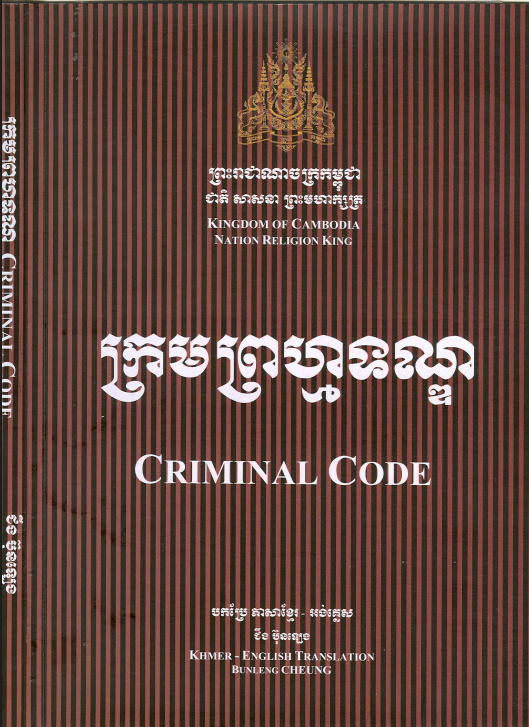
Understanding the Criminal Justice Process
Download brochure (PDF, Khmer/English). A step-by-step guide on what happens from investigation to trial to appeal, and the roles of police, prosecutors, and courts in each stage.
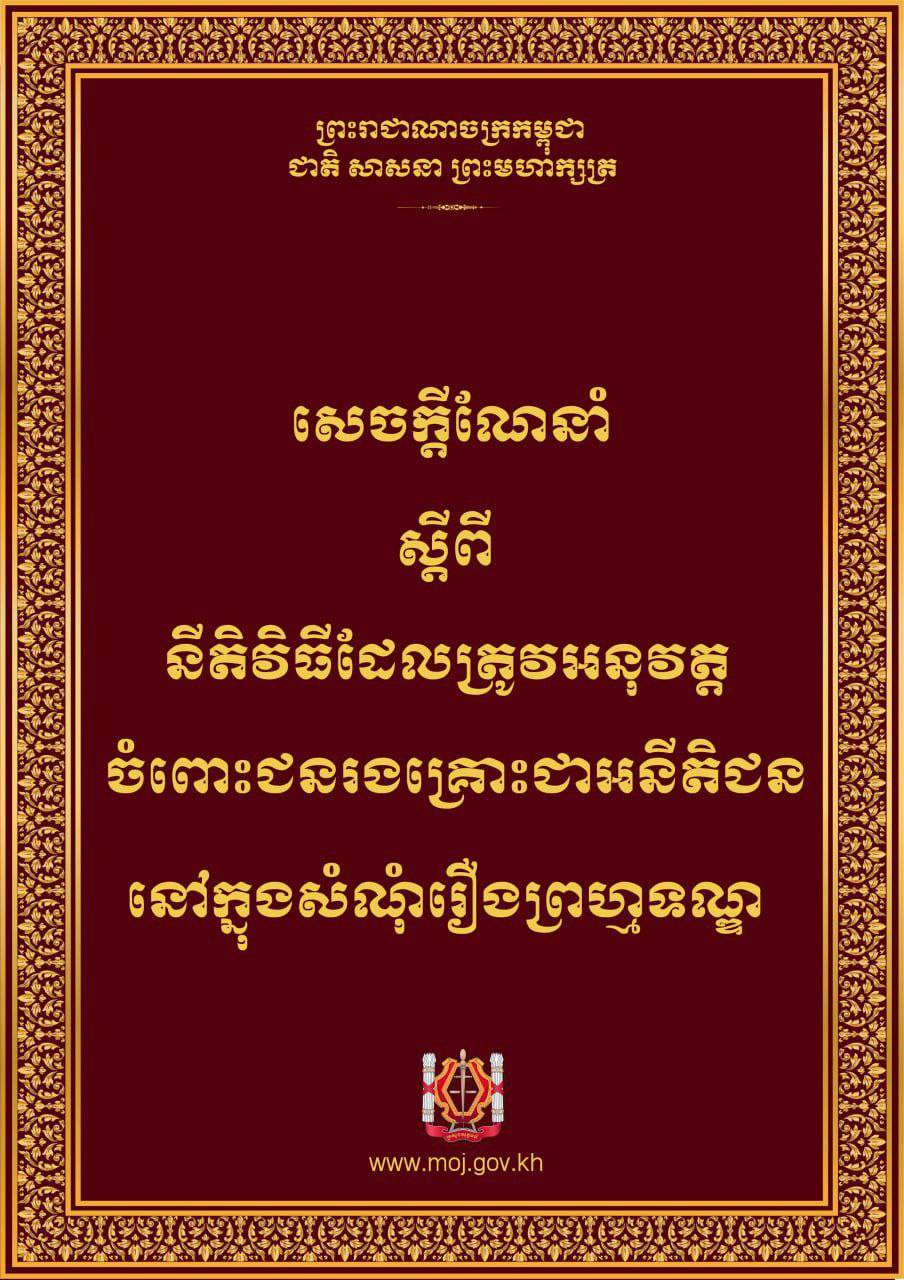
Rights of Victims in the Criminal Process
Download leaflet (PDF). Explains what victims can do, how to get information on their case, and their legal rights to representation and compensation.
Anti-Corruption: Your Role & Ours
Download poster (PDF). A public posterencouraging reporting of corruption, outlining how the public can safely report and howGPOSC prosecutors pledge to act with integrity.

Juvenile Justice
– Download info sheet (PDF). An overview of how cases involving minors are handled, emphasizing rehabilitation and special protections for children in conflict with the law.